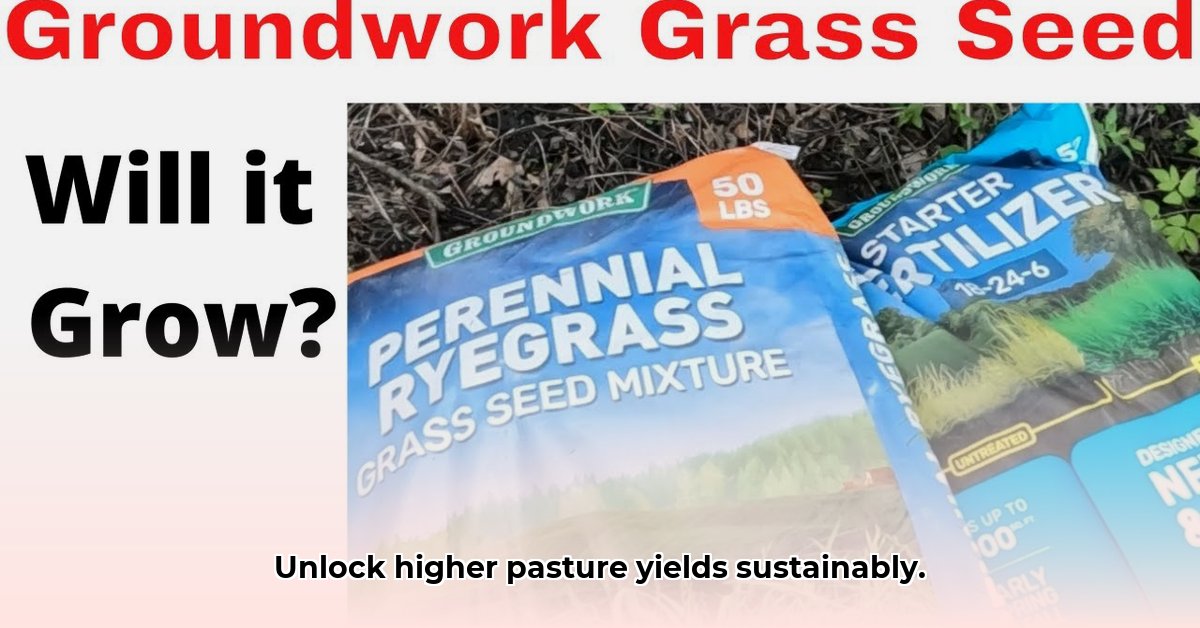
Pasture Seed Selection and Tractor Utilization for Sustainable Grazing
Sustainable grazing practices are crucial for long-term agricultural viability. This article examines how strategic pasture seed selection, coupled with appropriate tractor use and management techniques, can significantly increase yields while promoting environmental health. We will explore the importance of soil testing, climate considerations, and livestock needs in optimizing seed choice, and then discuss the role of the right tractor and equipment in efficient pasture establishment and maintenance. For more in-depth information on pasture management, check out this helpful resource: Pasture Management Guide. Finally, we'll delve into concepts of sustainable grazing practices and their positive impact on yield and environmental sustainability.
Choosing the Right Pasture Seeds: A Foundation for Success
Selecting the correct pasture seed is paramount for a productive and sustainable grazing system. Ignoring this crucial step is akin to building a house on a weak foundation. Several key factors influence seed selection: soil characteristics, prevailing climate, and livestock requirements.
First, obtain a comprehensive soil test. This analysis reveals vital information about nutrient levels and pH, directly influencing grass and legume suitability. Different plant species thrive under specific soil conditions; a soil test ensures you choose species well-suited to your land. A healthy soil fosters healthy plant growth, leading to higher yields and improved overall pasture health. This is not just a best practice; it's a fundamental necessity. How many farmers have seen firsthand the impact of nutrient-deficient soils on their yields?
Second, consider your local climate. Seeds must be climate-appropriate; drought-resistant varieties in arid regions, for instance, while cold-hardy varieties are crucial in colder climates. Ignoring climate leads to crop failure. For example, planting a tropical grass in a sub-Arctic environment is futile.
Third, match seed selection to your livestock's nutritional requirements. Different grasses and legumes provide varying nutrients. Pasture composition must meet livestock needs to ensure optimal health and productivity. “Choosing the right pasture mix is like creating a balanced diet for your livestock,” says Dr. Emily Carter, Agronomist at the University of California, Davis. “It’s not just about quantity; it's about the quality and variety of nutrients provided.” A balanced mix ensures healthy and productive animals.
The quality of your seed source is also crucial. High-quality seeds lead to stronger, more resilient plants. Don't compromise on quality; it's an investment in the future health and productivity of your pasture.
The Right Tractor and Equipment: Maximizing Efficiency
The appropriate tractor and equipment selection significantly impacts pasture establishment and management efficiency. A well-maintained, properly sized tractor reduces workload, fuel consumption, and overall cost.
Tractor size must align with operation scale and terrain. A small tractor suffices for smaller areas, while larger operations require more substantial equipment capable of handling rough terrain. Using a small tractor on a large farm is highly inefficient. "Think of it like choosing the right tool for the job," states John Miller, a veteran farmer from Nebraska. "If you’re using a small tractor on a large acreage, you’re significantly increasing your labor costs and potentially reducing the overall efficiency of your operation."
A precise seed drill is essential for uniform seed distribution and germination. Consistent planting ensures optimal plant growth and minimizes seed waste. Uneven planting invariably leads to patchy growth and reduced yields.
Regular maintenance is non-negotiable for minimizing equipment downtime and maximizing lifespan. Regular servicing and timely repairs prevent costly disruptions and extend equipment lifespan. “Proactive maintenance saves you money in the long run,” comments Sarah Jenkins, Equipment Maintenance Specialist at John Deere. “It’s far cheaper to prevent a breakdown than to fix one.”
Besides the tractor, other implements such as harrows and rollers are crucial for soil preparation, promoting optimal seed-soil contact and germination. Proper equipment choices significantly affect the efficiency of planting and post-planting operations.
Sustainable Grazing Practices: A Holistic Approach
Sustainable grazing is not just a trend; it's an essential strategy for the long-term health of your land. It involves maximizing yields while protecting the environment. Key strategies include:
Rotational Grazing: Moving livestock regularly to different pasture areas prevents overgrazing, allowing vegetation recovery and maintaining soil health. This method has proven to increase pasture longevity and overall yield.
Soil Health: Techniques like cover cropping and reduced tillage improve soil structure, fertility, moisture retention, and erosion control, creating a healthier environment for plant growth. Improved soil health directly translates to higher yield potential.
Integrated Pest Management: Implementing ecologically friendly methods for pest control minimizes environmental impact while maximizing crop protection.
Sustainable grazing isn't merely about immediate benefits; it's a long-term investment in land health and profitability. This approach ensures consistent returns and environmental stewardship.
Conclusion: A Path to Sustainable Pasture Management
Strategic pasture seed selection, coupled with the right tractor and equipment and complemented by sustainable grazing practices, forms a comprehensive approach to building high-yielding, environmentally friendly pastures. Integrating appropriate techniques, regular monitoring, and adapting practices based on site-specific conditions are crucial for long-term success. By embracing these approaches, you can significantly enhance yield, ensuring a healthy and productive future for your operation and the environment.